The Furnished Housing Advantage
Here is the most important thing anyone will tell you about packing for a Chicago internship: your housing choice determines 80 percent of your packing list. If you are moving into an unfurnished apartment, you are shipping a bed frame, a mattress, a desk, kitchen gear, linens, towels, cleaning products, and a small mountain of stuff you will use for three months and then sell, donate, or abandon. If you are moving into furnished co-living, you are packing one large suitcase and a backpack.
That is not a sales pitch. It is the math. According to the Bureau of Labor Statistics, furnishing a bedroom alone runs $1,500 to $2,500 at current prices. Add a basic kitchen setup — pots, pans, plates, utensils, a few small appliances — and you are looking at another $300 to $600. Linens, towels, and cleaning supplies push the total another $200 to $400. For a 12-week stay, that is $2,000 to $3,500 in stuff you will need to dispose of before you leave.
$3,000–5,000
Saved by not furnishing a temporary apartment
Furnished co-living eliminates furniture, kitchen gear, bedding, and cleaning supplies — the four most expensive packing categories for short-term moves.
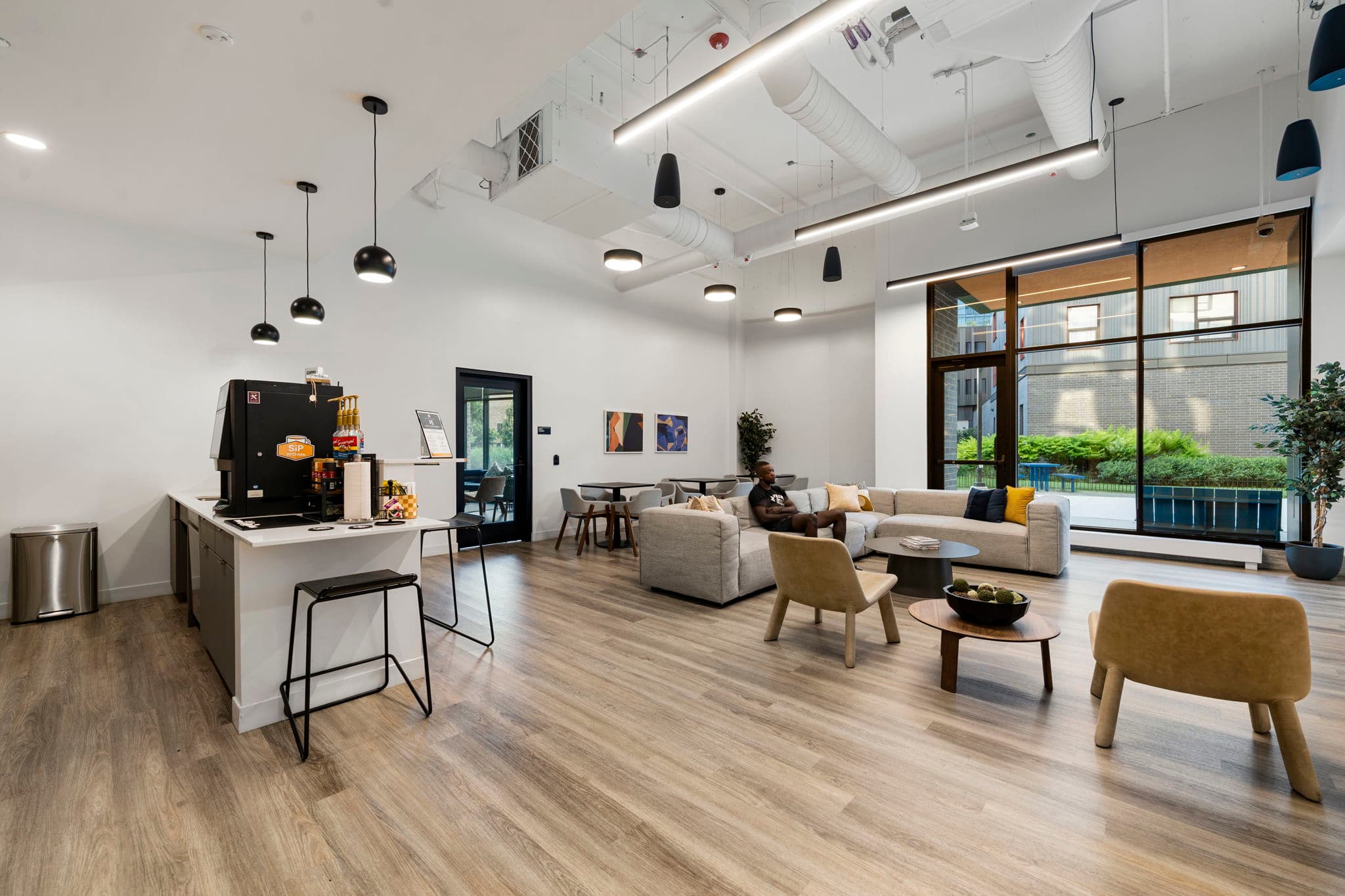
At Post Chicago in Lincoln Park, your private room comes with a bed frame, quality mattress, desk, ergonomic chair, linens, and pillows. The shared apartment includes a full kitchen with cookware, dishes, utensils, and appliances, plus a living room with furniture, a dining table, and in-unit laundry. Building amenities cover a fitness center, co-working spaces with phone booths, and a rooftop terrace. Weekly professional cleaning of shared spaces is included in your rent.
The rest of this guide assumes you have made the smart call and secured furnished housing. Everything below covers what you actually need to bring, organized by category, and just as importantly, what you should leave at home. For a complete breakdown of what furnished co-living rent covers, see our guide to what's included in co-living rent.
Chicago Summer Weather Reality
If your mental model of Chicago weather starts and ends with brutal winters, you are in for a surprise. Chicago summers are warm, humid, and unpredictable in ways that directly affect what you should pack. Understanding the weather patterns will save you from stuffing your suitcase with the wrong clothes and buying replacements during your first week.
According to the National Weather Service Chicago, average high temperatures run 77 degrees in June, 83 degrees in July, and 81 degrees in August. But averages hide the extremes. Heat waves push temperatures into the 90s multiple times each summer, and humidity makes it feel worse. The NWS summer climatology data shows July averages five days at or above 90 degrees, with dew points that push the heat index into genuinely uncomfortable territory.
Then there is the lake effect. Lake Michigan is a massive thermal regulator that creates its own microclimate along the shoreline. On hot days, the lakefront can run 10 to 15 degrees cooler than neighborhoods a few miles west. On cool evenings, the breeze off the lake makes a light jacket necessary even in mid-July. Post Chicago sits in Lincoln Park, close enough to the lakefront that you will feel these temperature swings daily — warm afternoons, noticeably cooler evenings.
Afternoon thunderstorms are the other variable you need to plan for. Chicago averages 38 thunderstorm days per year according to NWS station normals, and the majority cluster between May and September. These storms roll in fast, dump heavy rain for 20 to 40 minutes, and leave. They rarely ruin a full day, but getting caught without a rain jacket will absolutely ruin a commute.
What this means for your suitcase: Build your wardrobe around lightweight, breathable fabrics. Pack one packable rain jacket. Bring a light layer — a hoodie, cardigan, or thin jacket — for lake-effect evenings and the aggressively air-conditioned offices that are a universal feature of Chicago corporate life. Skip anything heavy. You will not need a winter coat, boots, scarves, or thermal layers between June and August. Period.
Work Wardrobe Essentials
Your internship wardrobe needs to cover two modes: the office and everything after. The office portion should be compact, versatile, and built around mix-and-match pieces that create multiple outfits from a few items. The after-work portion should be lightweight and weather-appropriate for a city that lives outdoors all summer.
Because your co-living unit includes an in-unit washer and dryer, you can run laundry weekly and operate with far fewer clothes than you think. This is the second biggest packing advantage of furnished co-living, right after not needing furniture.
Here is a breakdown by industry, because dress codes vary more than most interns expect:
| Industry | Typical Dress Code | What to Pack |
|---|---|---|
| Finance / Consulting | Business professional to business casual | 2-3 button-downs or blouses, 2 pairs of dress pants or a skirt, 1 blazer, dress shoes, 1 tie if applicable |
| Tech / Startup | Casual to smart casual | 3-4 quality tees or polos, 2 pairs of chinos or dark jeans, clean sneakers or loafers |
| Marketing / Media / Creative | Smart casual to creative | 3-4 versatile tops, 2 pairs of pants that dress up or down, 1 statement piece, white sneakers or flats |
| Nonprofit / Government | Business casual | 2-3 collared shirts or blouses, 2 pairs of khakis or slacks, comfortable but professional shoes |
| Healthcare / Lab | Scrubs or business casual | Scrubs (often employer-provided), 2-3 business casual outfits for non-clinical days, comfortable closed-toe shoes |
According to the National Association of Colleges and Employers (NACE), over 75 percent of employers now allow business casual or casual dress for interns outside of client-facing situations. The era of mandatory suits for summer interns is largely over, except at a handful of traditional financial and legal firms. When in doubt, ask your recruiter before you pack — a quick email saves you from bringing five blazers you never wear.
Regardless of your industry, every intern should pack these universal pieces:
- One blazer or structured jacket — instantly turns any outfit into a meeting-ready look when a client visit or executive presentation catches you off guard
- One pair of nice shoes — for networking events, presentations, or the occasional firm dinner
- A belt — the piece everyone forgets and nobody wants to buy the morning of their first day
- Minimal accessories — a watch, one or two pieces of jewelry, and a professional-looking bag or tote that doubles as your daily carry
The key principle is capsule thinking. Five to seven work outfits that rotate through the week, anchored by neutral colors that all work together, is the entire office wardrobe. You have laundry in your unit. Use it weekly and your clothes will last the whole summer without looking worn.
What NOT to Bring
This section exists because the number one packing mistake every intern makes is bringing too much. The instinct when moving to a new city — even temporarily — is to prepare for every scenario. Fight that instinct. Every extra item is something you have to transport to Chicago, store in a shared apartment, and transport home in August. Furnished co-living eliminates the bulkiest and most expensive categories entirely, so let it do its job.
Furniture of any kind. Your room has a bed, desk, chair, and storage. The shared living spaces are fully furnished. You do not need to bring a single piece of furniture. A desk lamp or monitor stand is fine. A chair or bookshelf is not.
Kitchen gear. Pots, pans, dishes, glasses, utensils, a blender, a toaster, a Brita filter — all of it is already in the shared kitchen. You do not need your own set. You especially do not need to ship a set across the country for three months of use.
Bedding and towels. Sheets, pillowcases, a duvet, and towels are provided with your room. If you are particular about your pillow, bring one from home. Everything else is covered.
Cleaning supplies. Shared spaces at Post Chicago receive weekly professional cleaning, and household basics — dish soap, paper towels, trash bags — are restocked as part of your lease. You do not need to arrive with a Costco haul of cleaning products.
Winter clothes. You are arriving in June and leaving in August or September. Leave the puffer jacket, the wool peacoat, the boots, the scarves, and the gloves at home. Even if you extend into early fall, the first genuinely cold days in Chicago do not arrive until late October.
A full toiletry stockpile. This is the stealth packing mistake. Bring travel-size toiletries for your first day or two, then buy full-size products at the Target on North Avenue, a 10-minute walk from Post Chicago. Shipping 64 ounces of shampoo across the country is an objectively terrible use of suitcase space. According to the TSA, liquids in checked bags have no size limit, but they are heavy and take up room that clothes should occupy.
More than three pairs of shoes. Work shoes, casual walking shoes, and sandals or flip-flops for the beach and rooftop. That is three pairs. Not seven. Chicago summers do not require boots, rain galoshes, or specialty footwear.
A printer. Post Chicago has on-site printing. Your office almost certainly does too. A printer is the single most pointless item to transport for a summer internship.
Excessive decor. One or two personal items to make your room feel like yours — a framed photo, a small plant, a favorite poster — is great. A carload of decorations for a 12-week stay is overkill. Your room already looks good. Add a personal touch and move on.
The rule of thumb: if your furnished housing provides it, leave it at home. For a deeper look at how furnished short-term housing works in Chicago, check our guide to furnished apartments for 3-month stays.
Tech and Office Gear
Your tech setup is the one packing category where you should not cut corners. The right devices and accessories will make your workdays more productive, your commute more enjoyable, and your evenings more comfortable. These items are small, high-impact, and worth the suitcase space.
Must-bring:
- Laptop and charger — if your employer provides a work laptop, bring your personal one anyway. Two-laptop setups are common for interns. Keep work on one, personal life on the other, and never worry about IT monitoring your Netflix queue.
- Phone and charger, plus a spare cable — cables die at the worst possible moments. Bring two. The backup lives in your work bag.
- Noise-canceling headphones — non-negotiable for open-plan offices, CTA commutes, and co-working spaces. If you do not own a pair, invest before you arrive. They will be the single most-used item you pack.
- A compact power strip with USB ports — your room has standard outlets, but a power strip consolidates your charging setup into one clean station at your desk. One strip, one outlet, everything charged.
- Portable external battery — for long days that go from the office to dinner to exploring the city without a stop at home. A 10,000mAh battery fits in any bag and gives you a full phone charge when you need it.
Nice-to-have:
- Portable monitor — a 15-inch USB-C portable monitor weighs about 2 pounds and turns your desk into a dual-screen workstation. Worth it if your internship involves coding, data analysis, financial modeling, or design work.
- USB-C hub or dongle — modern laptops have limited ports. A small hub with HDMI, USB-A, and an SD card slot saves you from adapter emergencies during presentations.
- Webcam — if your internship involves any remote work days or video calls from your room, a decent external webcam beats a laptop camera. The co-working spaces at Post Chicago have dedicated phone booths for private calls.
- Kindle or e-reader — lighter than physical books, holds thousands of titles, and does not drain your phone battery during your commute on the Red Line.
Your desk at Post Chicago is a real workspace — not a card table shoved in a corner. It is sized for a laptop, a portable monitor, and your daily essentials, paired with an ergonomic chair that will not wreck your back during evening study sessions. The building's co-working spaces offer additional desks, phone booths, and 500+ Mbps WiFi throughout. Between your room and the common areas, your tech setup is fully supported.
For more on how the co-living space supports your work life, see our intern housing guide.
Neighborhood Essentials for Lincoln Park
Lincoln Park is one of the most walkable, transit-connected neighborhoods in Chicago, and the essentials you need to enjoy it are simple and lightweight. A few smart purchases on arrival will dramatically improve your daily quality of life for the entire summer.
A Ventra card or the Ventra app. This is your CTA transit pass and the single most important item for getting around Chicago without a car. You can buy a physical card at any CTA station or download the Ventra app on your phone. The 30-day unlimited pass costs $75 and covers every train line and bus route in the city. From the North/Clybourn Red Line station — steps from Post Chicago — you can reach the Loop in 15 minutes, River North in 10, and the West Loop in 20. According to the CTA, the Red Line runs 24 hours, so late nights out never strand you. For a complete breakdown of getting around without a car, see our Lincoln Park transit guide.
A Divvy bike membership. Chicago's bikeshare system has stations throughout Lincoln Park and is one of the fastest ways to get around the neighborhood. An annual membership runs $119 (less than $40 for the summer months on the monthly plan at $16.99/mo), and it includes unlimited 45-minute classic bike rides. The lakefront trail, which runs 18 miles along Lake Michigan, is one of the best urban bike paths in the country. Check availability and pricing at Divvy Bikes.
Comfortable walking shoes. This is not optional. According to Walk Score, Lincoln Park scores 91 out of 100 for walkability. Your commute to the CTA station, your evening walk to dinner on Armitage Avenue, your weekend run along the lakefront trail — all of it is on foot. Bring shoes that can handle 5 to 8 miles a day without complaint.
Sunscreen, SPF 30 or higher. Chicago sits at 41.8 degrees north latitude, and the summer UV index regularly reaches 8 to 10, which the EPA classifies as very high to extreme. If you spend any time on the lakefront, at North Avenue Beach, or walking the neighborhood, sunscreen is not optional.
A reusable water bottle. Chicago tap water comes from Lake Michigan and is excellent. According to the City of Chicago Department of Water Management, the city's water treatment system consistently meets or exceeds EPA standards. Carry a reusable bottle, refill at work and at home, and skip the $3 convenience store markup.
A daypack or slim backpack. Not a hiking pack — something trim enough for a laptop, water bottle, headphones, and a light jacket. You will carry it to the office, to coffee shops on weekends, and on evening explorations. One bag that does everything is better than three bags that each do one thing.
The Master Packing Checklist
Everything above, distilled into a scannable list. Screenshot it, print it, or check items off as you pack. This assumes furnished co-living — if your housing is unfurnished, your list will be dramatically longer and heavier.
Work Clothes
- 2-3 tops appropriate for your industry (button-downs, blouses, polos, or quality tees)
- 2 pairs of work-appropriate pants, trousers, or skirts
- 1 blazer or structured jacket
- 1 pair of dress shoes or professional flats
- 1 belt
- Enough undergarments and socks for one week
Casual and Weekend Clothes
- 4-5 t-shirts or casual tops
- 2 pairs of shorts
- 1-2 pairs of jeans or casual pants
- 1 pair of sneakers or comfortable walking shoes
- 1 pair of sandals or flip-flops (beach, rooftop, quick runs to the store)
- 1 swimsuit (North Avenue Beach and the rooftop terrace will call)
- 1 light jacket or hoodie (lake-effect evenings)
- 1 packable rain jacket
- 2-3 sets of workout clothes (the fitness center is in your building)
- Sunglasses
Tech and Office
- Laptop and charger
- Phone and charger (plus a spare cable)
- Noise-canceling headphones
- Compact power strip with USB ports
- Portable external battery
- Portable monitor (optional but recommended for technical roles)
- USB-C hub or dongle (optional)
- Any work-specific equipment your employer requires
Toiletries (Travel-Size)
- Travel-size shampoo, conditioner, body wash (buy full-size on arrival)
- Toothbrush and toothpaste
- Deodorant
- Prescription medications (bring your full summer supply — do not rely on transferring prescriptions)
- Sunscreen, SPF 30+
- Basic first-aid: band-aids, pain relievers, allergy medication
- Contact lenses and solution, if applicable
Documents
- Government-issued ID (driver's license or passport)
- Health insurance card
- Internship offer letter and onboarding paperwork
- Copy of your lease agreement
- Bank cards and a small amount of cash
- Emergency contact information written down (not just in your phone)
Don't Bring
- Furniture (bed, desk, chair, dresser — all provided)
- Kitchen gear (pots, pans, dishes, utensils, appliances — all provided)
- Bedding and towels (sheets, pillows, duvet — all provided)
- Cleaning supplies (weekly professional cleaning included)
- Winter clothes (you are there June through August)
- More than 3 pairs of shoes
- A printer
- Heavy textbooks (go digital)
- Full-size toiletries (buy locally)
- Excessive room decor
Getting It All There
For most interns, one large checked bag and a carry-on backpack handles everything on this list. If you are flying, that is two items at the airline counter and you are done. If you are driving, even easier — but know that you will not need the car once you arrive. Lincoln Park is fully walkable and transit-connected, and Post Chicago does not require a vehicle for daily life.
If you have a few extra items that do not fit in luggage, shipping one or two boxes via USPS or UPS is straightforward. According to USPS, a large flat-rate Priority Mail box ships anywhere in the country for under $25 and arrives in 1 to 3 business days. Ship your boxes to arrive on or just after your move-in date, and they will be waiting in the building's secure package lockers.
The lighter you pack, the easier your arrival day. At Post Chicago, you walk in, pick up your keys, and your room is ready — bed made, desk set up, kitchen stocked, WiFi connected. Unpack your suitcase, hang your work clothes, set up your laptop, and you are home. That evening, walk to dinner on Armitage, grab a coffee at one of Lincoln Park's many shops, and start your Chicago summer the way it should start: exploring, not assembling IKEA furniture.
For help planning everything else around your move, our 30-day moving checklist covers the full timeline from accepting your offer to your first day. And if your employer offers a housing stipend, read our guide to maximizing your stipend before you sign a lease — the right housing choice can leave you with money in your pocket every month.
Your Room Is Ready for Summer
Furnished private rooms in Lincoln Park with 3-month leases built for interns. Utilities, WiFi, cleaning, and laundry included — just bring your suitcase.
Schedule a TourFAQ