What Are Your Options for a 3-Month Furnished Stay in Chicago?
Finding furnished housing in Chicago for exactly three months is harder than it should be. Traditional apartments require 12-month leases. Most landlords will not negotiate a shorter term, and those who do charge a significant premium. That leaves four realistic options, each with a different cost structure, level of service, and set of trade-offs.
$2,363
Monthly cost for a 3-month furnished stay at Post Chicago
Co-Living
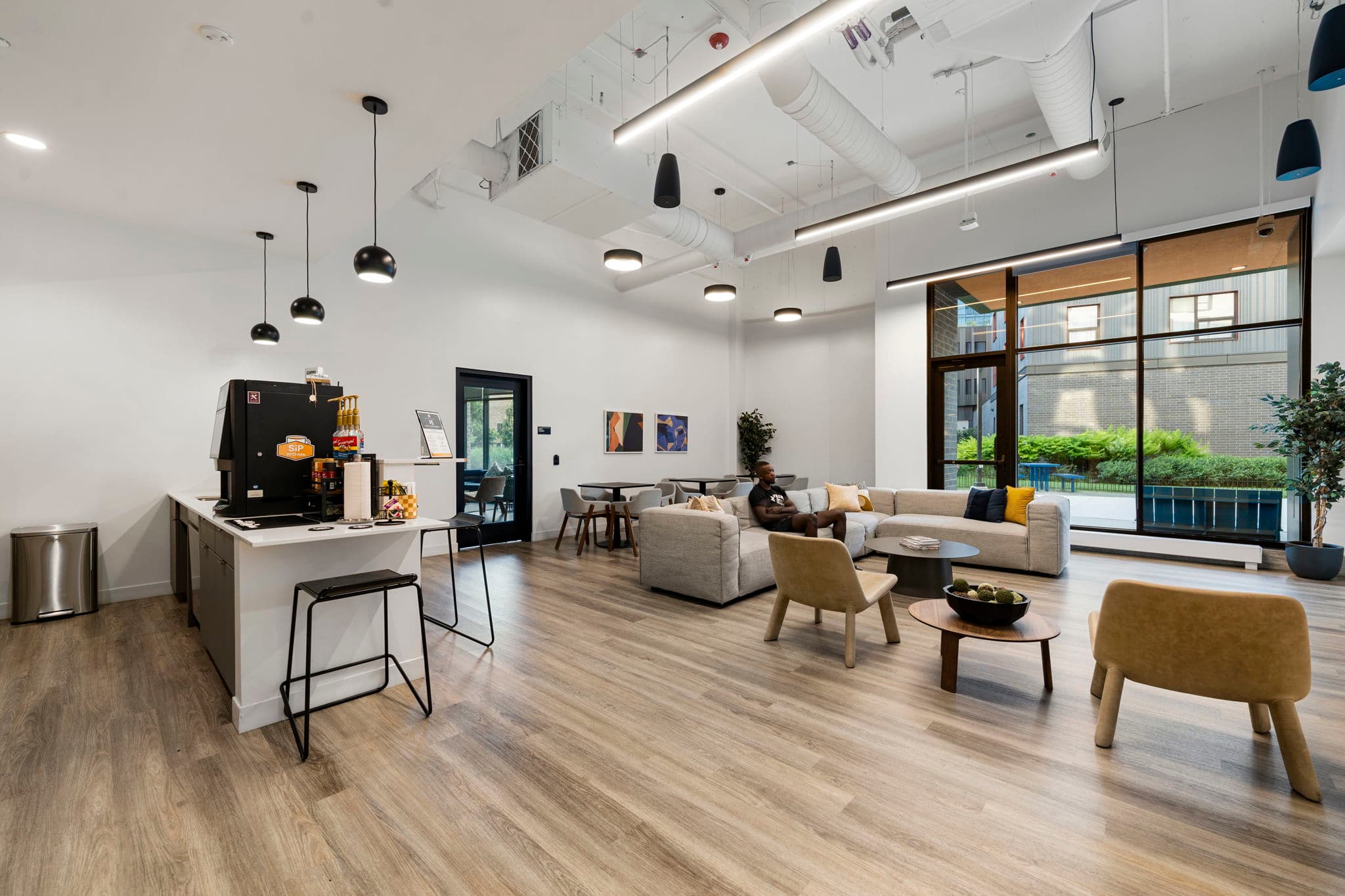
Co-living buildings offer private, furnished rooms with shared common spaces (kitchen, living room, laundry) and all-inclusive pricing. Lease terms are designed for flexibility — at Post Chicago, leases start at 3 months and extend to 18 months. The monthly rate for a 3-month term is higher than a 12-month term (reflecting the shorter commitment), but the all-inclusive pricing eliminates the utility, furniture, and setup costs that make other short-term options expensive.
Corporate Housing
Corporate housing providers furnish and lease traditional apartments on short-term arrangements, typically 30 days to 12 months. These are fully equipped apartments — furniture, kitchen supplies, linens, utilities, WiFi — managed by companies that specialize in relocations and business travel. The quality is generally high, but the cost reflects the service level and the overhead of furnishing and maintaining individual apartment units across the city.
Short-Term Rentals (VRBO, Subletting Platforms)
Short-term rental platforms offer furnished apartments and homes for stays of one night to several months. For a 3-month stay, the nightly rate typically drops significantly compared to a weekend booking, but the total cost remains high. Chicago requires short-term rental operators to be licensed under the Chicago Shared Housing Ordinance, and listings that lack proper licensing may face cancellation or legal complications mid-stay.
Extended-Stay Hotels
Extended-stay hotel chains offer kitchenette-equipped rooms with weekly housekeeping for monthly rates. These are the most turnkey option — you book online, show up, and everything works. But the rooms are small, the kitchens are minimal, and the monthly cost is the highest of all four options. They are best suited for stays under 30 days or for travelers who need hotel-style services and are willing to pay for them.
How Much Does Each Option Cost?
Price is the factor that narrows most people's search. Here is what a 3-month furnished stay in Chicago actually costs, by option, with all fees included.
| Cost Factor | Co-Living (Post) | Corporate Housing | Short-Term Rental | Extended-Stay Hotel |
|---|---|---|---|---|
| Monthly Rate | $2,363 | $3,000-4,500 | $3,500-5,000 | $4,000-6,000 |
| Utilities | Included | Included | Usually included | Included |
| WiFi | Included (500+ Mbps) | Included | Varies | Included |
| Furniture | Included | Included | Included | Included (basic) |
| Cleaning | Weekly (included) | Biweekly (varies) | None or self-service | Weekly (included) |
| Security Deposit | 1 month | 1-2 months | Varies | Credit card hold |
| Service/Platform Fees | None | $0-500 setup | 10-15% platform fee | Resort/facility fee |
| 3-Month Total | $7,089 + deposit | $9,000-14,000 + deposit | $11,550-17,250 | $12,000-18,000 |
The co-living total assumes Post Chicago's 3-month Private Room rate of $2,363/month. The corporate housing range reflects furnished one-bedrooms in Lincoln Park, River North, and the West Loop from major relocation providers. The short-term rental estimate includes platform service fees (typically 10-15% added to the listed price). Extended-stay hotel pricing reflects chains with kitchenette-equipped rooms in desirable neighborhoods.
The gap is significant. Over three months, co-living saves $1,911 to $10,911 compared to the alternatives — and that savings comes with a higher level of included amenities than most corporate housing or short-term rental options provide.
What Is Included in Each Option?
The monthly rate tells you what you pay. The inclusion list tells you what you get. These are not the same thing across all four options.
| Included Item | Co-Living (Post) | Corporate Housing | Short-Term Rental | Extended-Stay Hotel |
|---|---|---|---|---|
| Private bedroom | Yes | Yes | Yes | Yes |
| Full kitchen | Yes (shared) | Yes (private) | Usually | Kitchenette only |
| In-unit laundry | Yes | Sometimes | Sometimes | Coin-op or none |
| Linens & towels | Yes | Yes | Usually | Yes |
| High-speed WiFi | Yes (500+ Mbps) | Yes | Varies | Yes |
| Weekly cleaning | Yes | Biweekly or none | No | Yes |
| Co-working space | Yes | No | No | Business center |
| Fitness center | Yes | Building-dependent | No | Usually |
| Outdoor space | Yes (terrace, fire pit) | Building-dependent | Varies | Limited |
| Community events | Yes | No | No | No |
| On-site management | Yes | Remote management | Host-dependent | Yes (front desk) |
Co-living's advantage is not just price — it is the combination of price and inclusions. Corporate housing matches most of the physical amenities but lacks community spaces and charges 30-90% more. Short-term rentals are the least predictable: quality, amenities, and responsiveness vary by individual host. Extended-stay hotels provide consistency and service but in a smaller, less homelike space.
For a detailed breakdown of what co-living rent covers, read what is included in co-living rent.
The Risks of Short-Term Subletting
Subletting — renting someone else's apartment while they are away — is a common suggestion for short-term housing in Chicago. It can work, but the risks are real and underappreciated.
Scams are common. Short-term sublet listings attract fraudulent posts, particularly on unmoderated platforms. Scammers post photos of apartments they do not control, collect deposits, and disappear. According to the Illinois Compiled Statutes on landlord-tenant relationships, a subletter's legal protections depend on whether the original lease permits subletting and whether the sublet agreement is properly documented. Many informal sublets have neither.
The apartment may not match the listing. Sublets are furnished with the original tenant's belongings, which may not include everything you need. A "furnished" sublet might mean a bed and a couch but no desk, no kitchen essentials, and no linens. You do not get to choose the mattress quality, the WiFi speed, or the cleanliness standard.
Maintenance is unreliable. If something breaks in a sublet, the original tenant is your point of contact — not a building management team. If that person is traveling abroad or simply unresponsive, you are left navigating a repair process with a landlord who does not have a direct relationship with you.
Lease violations can affect you. If the original tenant did not get landlord approval for the sublet, the landlord can terminate the lease and require you to vacate — potentially with minimal notice. This is not theoretical; it happens regularly in Chicago's rental market.
For anyone staying three months or longer, a legitimate lease with a managed property provides legal protection, consistent quality, and a responsive management team. The modest cost premium over a sublet is effectively insurance against the scenarios above.
Who Needs 3-Month Housing in Chicago?
Three-month stays are more common than the traditional rental market acknowledges. The demand comes from several distinct groups, each with specific needs.
Summer interns represent the largest single group. Internship programs at Chicago's major employers — in finance, consulting, tech, healthcare, and law — typically run 10-12 weeks from June through August. These interns need furnished housing near public transit, and most are relocating from another city with no existing furniture or local connections.
Travel nurses and healthcare professionals on 13-week contract assignments need housing near Chicago's major hospital systems. Northwestern Memorial, Rush, University of Chicago Medical Center, and Advocate systems all rely on contract staffing. According to the Bureau of Labor Statistics, registered nurses are among the most in-demand occupations nationally, and contract nurses in particular need flexible, furnished housing that aligns with their assignment duration.
Corporate relocators exploring Chicago before committing to a permanent move use 3-month stays to test neighborhoods, commute routes, and lifestyle fit. A furnished 3-month lease provides a stable base for apartment hunting without the pressure of making a permanent decision immediately.
Students between semesters — including those on co-op programs, taking summer courses at a different university, or completing research placements — need short-term housing that does not require a 12-month commitment.
Remote workers and consultants on temporary Chicago-based projects need a home base that is more functional than a hotel and more flexible than a traditional lease. Co-working spaces, reliable WiFi, and a quiet private room are the minimum requirements.
Each of these groups shares the same core need: furnished, flexible, and fairly priced housing for a defined period. Co-living was built for exactly this use case.
Read the full intern housing guide
Learn how to use your employer housing stipend
3-Month Furnished Stays in Lincoln Park
Private rooms from $2,363/mo, all-inclusive. No furniture to buy, no utilities to set up. Move in with a suitcase.
Check AvailabilityFAQ