Why Chicago Intern Housing Is Different
Traditional apartments do not work for interns, and the sooner you accept that, the less time you will waste. The standard Chicago rental market is built around 12-month leases on unfurnished units. You sign for a year, buy thousands of dollars in furniture, open utility accounts with ComEd and Peoples Gas, schedule a Comcast installation, and settle in. That model makes sense if you are planting roots. It makes zero sense if you are arriving in June and leaving in August.
Summer interns face a specific set of constraints that most housing options ignore. You need a 3-to-4 month lease. You need the place furnished — nobody is buying a bed frame for 12 weeks. You need utilities included because setting up and canceling accounts for a single summer is a bureaucratic headache that wastes your first and last week. And ideally, you need to be near public transit so you can actually get to work without a car.
According to the Bureau of Labor Statistics, the Chicago metropolitan area employs over 4.5 million workers, and major employers across consulting, tech, finance, and healthcare bring in thousands of summer interns every year. Yet the city's rental infrastructure has not caught up. Most landlords still refuse leases under 12 months. The result is a gap between what interns need and what the market offers — a gap that co-living was built to fill.
3 months
Minimum lease at Post Chicago — perfect for summer internships
At Post Chicago in Lincoln Park, you can sign a lease for exactly the length of your internship — 3 months, 4 months, or any term up to 18 months. Your room arrives furnished, utilities are on, WiFi is connected, and you can move in with nothing more than a suitcase and a laptop. That is not a luxury. For interns, it is a necessity.
How Much Does Summer Intern Housing Cost in Chicago?
Expect to pay between $1,500 and $2,500 per month for a furnished, short-term housing option in a desirable Chicago neighborhood. That range covers co-living and some sublets. If you drift into Airbnb or extended-stay hotel territory, the numbers climb fast — $3,500 to $5,000 or more per month for a private unit.
Here is how the major options compare for a 3-month summer stay:
| Housing Option | Monthly Cost | Furnished? | Utilities Included? | Lease Flexibility | Risk Level |
|---|---|---|---|---|---|
| Co-Living (Post Chicago) | $2,363 (Private) / $2,563 (Premium) | Yes | Yes — all utilities, WiFi, cleaning | 3-month lease available | Low |
| Airbnb (private room) | $3,500–5,000 | Yes | Yes | No lease — cancel anytime | Low, but expensive |
| Subletting | $1,800–2,500 | Sometimes | Usually not | Informal, often no lease | High — scams, no legal protection |
| Extended-Stay Hotel | $5,000–7,000 | Yes | Yes | No lease | Low, but very expensive |
| Traditional Apartment | $2,100+ (12mo lease) | No | No | 12 months minimum | High — stuck with long lease |
The co-living option at Post Chicago hits the sweet spot: all-inclusive pricing that fits within most employer housing stipends, a real lease with legal protection, and zero setup costs. The $2,363/mo rate for a 3-month private room includes furniture, water, electricity, gas, 500+ Mbps WiFi, weekly cleaning of shared spaces, and full access to building amenities including a fitness center, co-working spaces, and rooftop terrace.
Subletting is cheaper on paper, but the risks are real. According to the Illinois Compiled Statutes, subletting without the landlord's written consent can result in eviction for both the sublessor and sublessee. Facebook Marketplace and Craigslist sublet listings frequently involve scams — fake listings, security deposits that vanish, and units that look nothing like the photos. As a summer intern new to Chicago, you have neither the time nor the local knowledge to vet these deals properly.
Airbnb works if money is no object, but at $3,500 to $5,000 per month for a private unit in Lincoln Park or River North, it will blow through most housing stipends and leave you covering the difference out of pocket. According to BLS wage data, the average summer intern earns $20–$35 per hour. After taxes, that leaves limited room for a $4,000/mo Airbnb.
Summer 2026 Rooms Available
Lock in your 3-month lease at Post Chicago before summer spots fill up.
Check AvailabilityHow to Maximize Your Employer Housing Stipend
Most major employers that hire summer interns in Chicago offer some form of housing assistance. The amount varies by industry and company size, but the median sits around $3,000 per month for Chicago placements. Tech companies and top-tier consulting firms tend to offer $3,000 to $4,000 per month. Financial services firms average $2,500 to $3,500. Nonprofits and government agencies may offer less or provide corporate housing instead.
The critical question is how the stipend is structured. Some employers pay a flat monthly amount regardless of your actual housing cost — if your rent is $2,363 and your stipend is $3,000, you keep the $637 difference. Others reimburse actual expenses up to a cap, meaning you only get back what you spend.
Here is the catch that surprises many interns: housing stipends are almost always taxable income. The IRS (Publication 15-B) treats employer-provided housing stipends as taxable fringe benefits unless the housing is on the employer's premises and required as a condition of employment. For most interns, that means federal income tax, Social Security, Medicare, and Illinois state income tax are withheld. A $3,000 stipend might net you $2,250 after a roughly 25% effective withholding rate.
This makes your housing choice even more consequential. At $2,363/mo for a 3-month co-living lease, the all-inclusive rent fits comfortably within most after-tax stipends — and you have zero additional housing costs to worry about. No furniture to buy, no utility bills to pay, no WiFi to set up.
For a deep dive on stipend structures, tax math, and strategies to stretch your dollars further, read our detailed guide to employer housing stipends.
Best Chicago Neighborhoods for Interns
Where you live determines how much of Chicago you actually experience during your internship. The right neighborhood puts you close to work, close to transit, and close to the restaurants, parks, and nightlife that make a Chicago summer unforgettable.
Lincoln Park
Lincoln Park is the strongest all-around choice for summer interns. It combines direct CTA access to every major office corridor with the walkability, safety, and neighborhood character that make daily life enjoyable.
Post Chicago sits at 853 W Blackhawk St, steps from the North/Clybourn Red Line station. From there, you can reach the Loop in 15 minutes, River North in 10, and the Magnificent Mile in 12. The Brown Line at Armitage is a short walk or bus ride away, connecting you to the Merchandise Mart (where many consulting and tech firms have offices) in under 10 minutes.
Beyond the commute, Lincoln Park offers DePaul University's campus, the 1,200-acre Lincoln Park itself (with the free Lincoln Park Zoo), the lakefront running trail, and a density of restaurants and bars along Wells Street, Armitage Avenue, and the Clybourn Corridor. According to Choose Chicago, Lincoln Park consistently ranks among the city's top neighborhoods for walkability, dining, and quality of life.
For a comprehensive look at living in this neighborhood, see our Lincoln Park neighborhood guide.
River North
If your internship is at a Loop or River North office, living in River North puts you within walking distance. Many consulting firms, financial institutions, and ad agencies are headquartered here. The tradeoff: River North rents are among the highest in Chicago, and the neighborhood skews loud and nightlife-heavy. It is a great place to go out on a Friday. It is a less great place to sleep on a Saturday.
West Loop
Chicago's tech and creative corridor. If you are interning at a startup, design firm, or one of the tech companies clustered around Fulton Market, West Loop puts you in the center of the action. The neighborhood also has some of the city's best restaurants — Alinea, Girl & the Goat, and Au Cheval are all here. Green and Pink Line access connects you to the Loop in under 10 minutes.
Lakeview
Slightly more affordable than Lincoln Park with a younger, more social vibe. Wrigley Field brings energy in the summer (and noise on game nights). Red and Brown Line access is strong. The commute to the Loop takes about 20 minutes. Lakeview is popular with interns who prioritize nightlife and affordability over proximity.
Commute Times from Lincoln Park to Major Office Corridors
| Destination | CTA Route | Travel Time |
|---|---|---|
| The Loop (Financial District) | Red Line from North/Clybourn | 15 min |
| River North | Red Line 1 stop or bus | 10 min |
| Merchandise Mart | Brown Line from Armitage | 8 min |
| West Loop / Fulton Market | Blue Line transfer at Clark/Lake | 20 min |
| Streeterville / Mag Mile | Red Line to Grand or Chicago | 12 min |
| Old Town | Walk or bus | 5–10 min |
Transit data from CTA. All times are approximate and reflect off-peak travel. Rush hour adds 3–5 minutes.
What's Included in Furnished Intern Housing?
The phrase "furnished apartment" covers a wide spectrum in Chicago, from a bare mattress on the floor of a sublet to a fully equipped co-living suite. What matters is the total package — not just whether there is a bed, but whether every cost and hassle has been accounted for.
At Post Chicago, your rent covers everything you need to live comfortably from day one:
Your private room:
- Bed frame and quality mattress (from Floyd and Article)
- Desk and chair — a real workspace, not a folding table
- Linens package — sheets, pillows, duvet
- Closet with hanging rod and shelf space
- Personal lock on your door
Shared apartment spaces:
- Full kitchen with cookware, dishes, utensils, and appliances
- Living room with sofa, smart TV, and seating
- Dining table and chairs
- In-unit washer and dryer — no laundromat trips
Utilities and services — all included:
- Electricity, gas, and water
- High-speed WiFi (500+ Mbps) — pre-installed, no setup needed
- Trash and recycling
- Weekly professional cleaning of shared spaces
- Household supplies restocked (dish soap, paper towels, trash bags)
Building amenities — no extra fees:
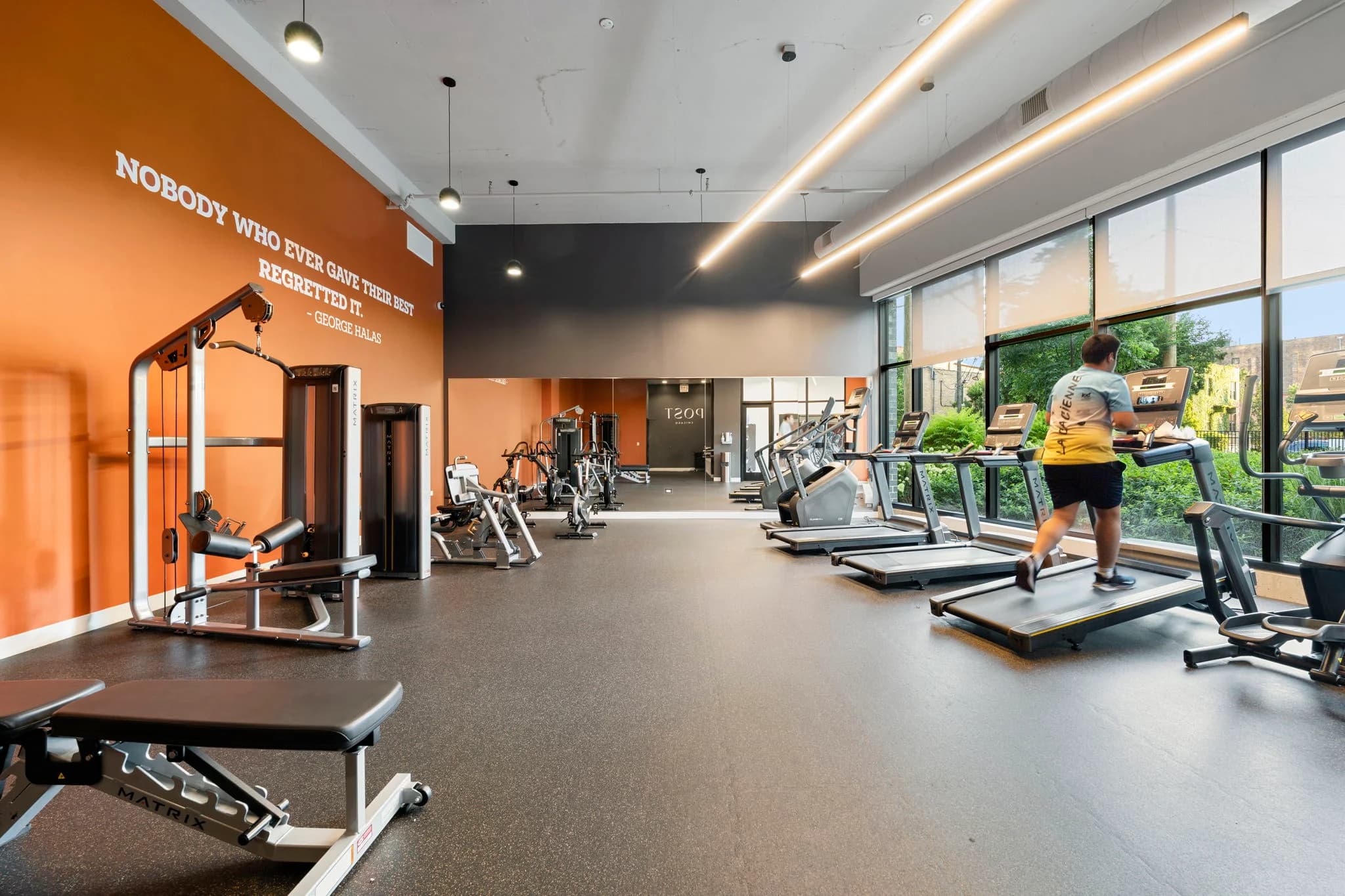
- Fitness center with cardio and weights
- Co-working spaces with phone booths for video calls
- Rooftop terrace with fire pit and grill
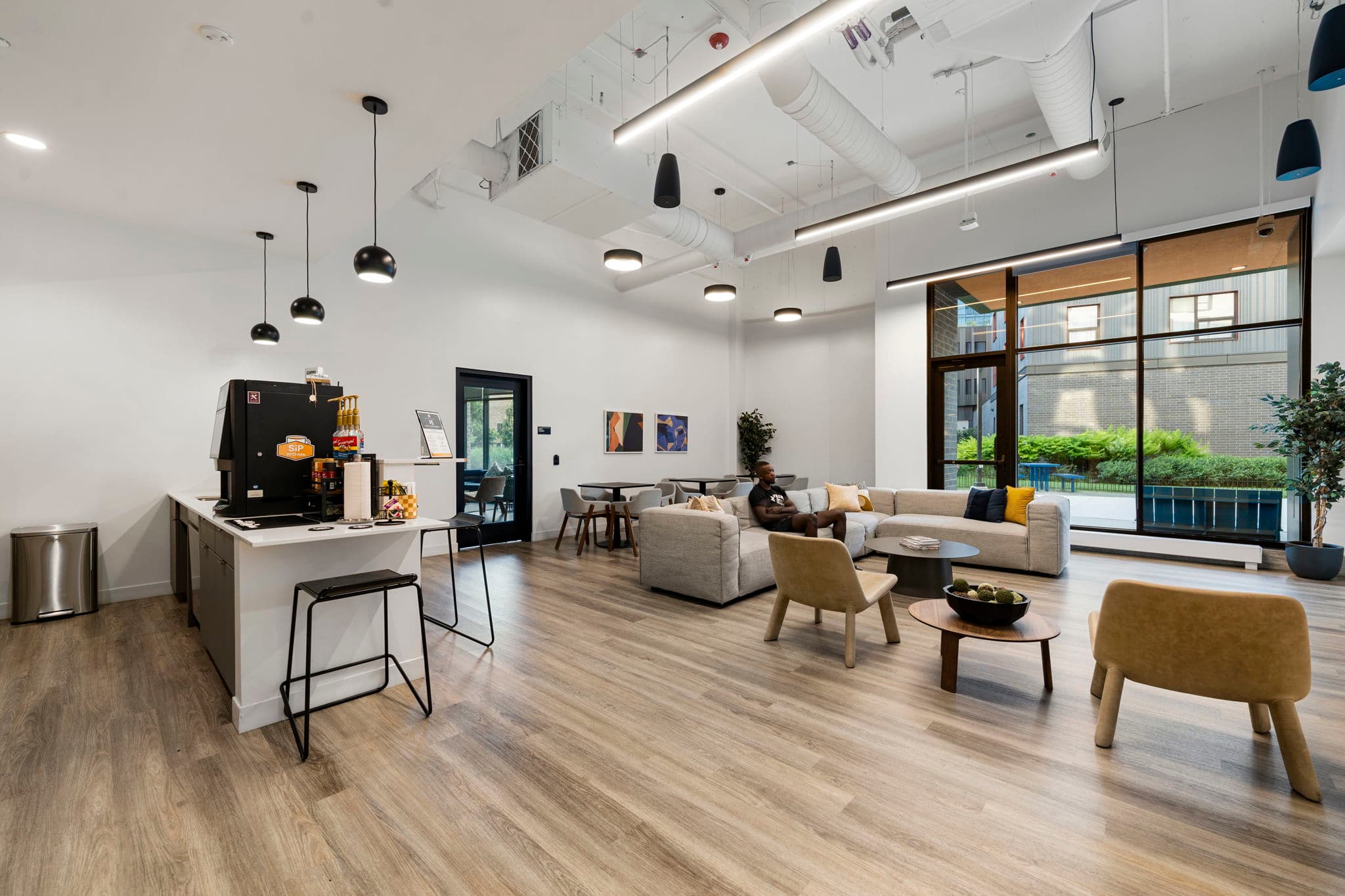
- Community lounge and coffee bar
- Secure package lockers
- Bike storage
According to the U.S. Department of Energy, the average Chicago household spends $190/mo on utilities alone. At Post Chicago, that is included. Add in the value of the fitness center ($50–$260/mo for a gym membership), co-working space ($200–$400/mo for a desk at a WeWork), and weekly cleaning ($150–$250/mo for a service), and the all-inclusive rent represents significant embedded value.
For a complete item-by-item breakdown of what co-living rent covers, see our full inclusions guide.
The Intern Housing Timeline
Timing matters more than most interns realize. The best furnished housing options for summer fill up months in advance, and waiting until May to start looking for a June move-in leaves you with leftover inventory and higher prices.
4 Months Before (February–March)
This is when you should start. Most internship offers come in between October and February. Once you have your start date confirmed, begin researching housing immediately. At this stage:
- Confirm your internship dates and location
- Check your offer letter for housing stipend details — amount, structure (flat vs. reimbursement), and timing
- Research neighborhoods based on your office location and commute preferences
- Submit inquiries to co-living buildings early — the best furnished options in popular neighborhoods fill up months in advance, especially for summer start dates
2–3 Months Before (March–April)
This is decision time. Tour options (in person or virtually), compare total costs, and sign your lease. At Post Chicago, the process from first inquiry to signed lease can happen in as little as one week:
- Complete your application (ID, proof of income or offer letter, background check authorization)
- Sign your lease for the exact term that matches your internship
- Confirm your move-in date
2 Weeks Before
Logistics. Coordinate your arrival — book travel, confirm your move-in time with the building, and pack. For co-living, packing is simple: clothes, laptop, toiletries, and personal items. Everything else is already in your room.
Move-In Day
At Post Chicago, you arrive, pick up your keys, and walk into a fully furnished room with the WiFi already connected. Unpack, explore the building, meet your housemates, and head to dinner in Lincoln Park. That evening, you are home.
Making the Most of Your Chicago Summer
A summer internship in Chicago is not just a line on your resume. The city opens up in the summer in a way that few other American cities can match — and the experiences you have outside of work will shape your memory of these months as much as anything you do at the office.
The Lakefront
Chicago's 18-mile lakefront trail is the city's defining feature from June through September. Run it, bike it, or simply walk it. North Avenue Beach is a 15-minute walk from Post Chicago. According to Choose Chicago, the lakefront sees over 20 million visits per year, and summer weekends bring festivals, volleyball leagues, and free concerts at the Pritzker Pavilion in Millennium Park.
Food and Neighborhoods
Chicago is a food city with genuine depth. Start with the classics — deep-dish at Pequod's (a 10-minute walk from Post Chicago), Italian beef at Al's, and tacos in Pilsen. Then explore: Chinatown for dim sum, Devon Avenue for Indian, Andersonville for Swedish heritage bakeries. The West Loop restaurant corridor (Randolph Street) is a 15-minute train ride away and home to some of the country's best restaurants.
Transit Tips
Buy a Ventra card immediately. The 7-day unlimited CTA pass ($20) is the best deal for interns who ride daily. Divvy bike-share ($119/year or $16.50/month) is a great supplement — Lincoln Park has stations on nearly every block. You do not need a car. According to CTA ridership data, the system handles over 1.5 million rides per day, and the Red Line from North/Clybourn runs every 3–7 minutes during rush hour.
Building Your Network
Your co-living housemates are your built-in social network. At Post Chicago, residents include other interns, graduate students, young professionals, and digital nomads — all roughly in your age range, all new or relatively new to Chicago. The building hosts community events on the rooftop terrace, and the co-working spaces become natural gathering points. Some of the most valuable professional connections happen not at networking events but over coffee in the lounge at 7 AM or around the fire pit at 9 PM.
Dive Deeper
This guide covers the fundamentals of finding intern housing in Chicago. For more specific questions, we have written detailed guides on the topics that matter most:
-
How to Use Your Employer Housing Stipend in Chicago — A practical guide to stipend structures, tax implications, and strategies to stretch your dollars further.
-
Furnished Apartments for 3-Month Stays in Chicago — A comparison of every short-term furnished housing option in Chicago, with real pricing and honest pros and cons.
-
What to Pack for a Chicago Internship — The essential packing list for a summer in Chicago, from weather-appropriate clothing to the tech gear you actually need.
You can also explore our broader guides on co-living in Chicago and living in Lincoln Park for a full picture of what life looks like at Post Chicago.
Summer Rooms Are Filling Up
Secure your furnished room in Lincoln Park for summer 2026. 3-month leases available — apply in minutes.
Check AvailabilityFAQ