Lincoln Park Safety by the Numbers
If you're researching Chicago neighborhoods, you've almost certainly come across the city's reputation for crime. And if that reputation is making you hesitate about moving here, you're not alone — it's one of the top concerns we hear from prospective residents at Post Chicago, especially those relocating from other cities or suburbs. So let's start with what the data actually says about Lincoln Park specifically, because the citywide narrative does not apply evenly to every neighborhood.
According to the Chicago Police Department's Public Safety Dashboard, Lincoln Park (part of CPD District 18, known as the Near North District) has a violent crime rate that runs approximately 60-65% below the citywide average. That's not a marketing claim — it's a consistent pattern visible across multiple years of CPD CLEAR data.
~60%
Below citywide average violent crime rate
Lincoln Park's violent crime rate consistently runs well below Chicago's citywide average, according to CPD district-level data.
To put that in perspective, Lincoln Park's violent crime rate is comparable to neighborhoods in cities like Portland, Minneapolis, and Denver — places that don't carry Chicago's outsized reputation. The neighborhood benefits from high residential density, an active community policing program (Chicago's CAPS initiative), well-lit commercial corridors, and a population that's heavily invested in maintaining quality of life.
Here's how Lincoln Park's crime profile breaks down compared to the city as a whole:
| Category | Lincoln Park (District 18) | Chicago Citywide | Difference |
|---|---|---|---|
| Violent crime rate | ~5.2 per 1,000 | ~13.5 per 1,000 | -62% |
| Property crime rate | ~28 per 1,000 | ~35 per 1,000 | -20% |
| Most common incident | Theft (package/bike theft) | Theft | — |
| Least common serious crime | Homicide (rare) | — | — |
Rates are approximate annual figures derived from CPD CLEAR data and FBI Uniform Crime Reporting methodology. Exact figures vary by year.
The key distinction: Lincoln Park's crime profile is dominated by property crime — specifically theft. Package theft, bike theft, and car break-ins account for the majority of reported incidents. These are real and worth preparing for (we'll cover prevention below), but they represent a fundamentally different risk profile than what most people imagine when they think "Chicago crime."
Violent crime in Lincoln Park is uncommon. When it occurs, it's typically concentrated in specific late-night scenarios rather than representing a general ambient risk throughout the neighborhood. The 18th District consistently ranks among the lowest in Chicago for violent offenses, a pattern that's held for over a decade.
How Lincoln Park Compares to Other Popular Neighborhoods
Most young professionals and students who are apartment-hunting in Chicago narrow their search to four or five North Side and Near West Side neighborhoods. Here's how Lincoln Park stacks up against the other top contenders on safety metrics.
| Metric | Lincoln Park | Lakeview | Wicker Park | West Loop | Logan Square |
|---|---|---|---|---|---|
| Violent crime rate vs. city avg. | ~60% below | ~45% below | ~40% below | ~35% below | ~30% below |
| Property crime rate vs. city avg. | ~20% below | ~15% below | ~10% below | ~5% below | Near average |
| Most common concern | Package theft | Car break-ins | Bike theft | Auto theft | Catalytic converter theft |
| Walk Score | 87 | 83 | 95 | 92 | 84 |
| Night walkability (subjective) | High | High | Moderate-High | Moderate | Moderate |
| Community policing (CAPS) | Very active | Active | Active | Active | Active |
| CPD District | 18 | 19 | 14 | 12 | 14 |
Sources: CPD CLEAR Map, Walk Score, community reporting data.
All five of these neighborhoods are considered safe by urban standards. None of them should cause a reasonable person to hesitate about moving there. But Lincoln Park's combination of low violent crime, high pedestrian traffic, well-maintained streets, and engaged residents gives it a slight but consistent edge.
A note on methodology: crime statistics per 1,000 residents can be misleading in commercial districts that draw large non-resident populations (the West Loop and Wicker Park, for example, have high foot traffic from visitors that inflates per-resident rates). Lincoln Park is primarily residential, which means its per-capita numbers more closely reflect the experience of people who actually live there.
For a deeper comparison of these neighborhoods beyond safety — covering rent, dining, nightlife, transit, and overall vibe — see our Lincoln Park vs. Wicker Park vs. Lakeview comparison.
Street-Smart Tips for Newcomers
Even in one of Chicago's safest neighborhoods, basic urban awareness goes a long way. If you're moving to Lincoln Park from a suburb, a small town, or a city with a very different layout, here are the practical habits that experienced residents develop quickly.
Stay on well-lit corridors at night
Lincoln Park's main commercial streets — Armitage Avenue, Halsted Street, Clark Street, and Lincoln Avenue — are well-lit, lined with businesses, and see pedestrian traffic well into the evening. These are your go-to routes for walking home after dinner or a night out. The residential side streets between these corridors are quieter and darker, but generally safe. The adjustment is simple: default to the busier streets, especially after 10 PM.
Be aware of park hours
Lincoln Park (the park itself, not the neighborhood) officially closes at 11:00 PM and reopens at 6:00 AM. The Chicago Park District enforces these hours, and while the Lakefront Trail sees some late-night runners, it's generally wise to avoid isolated park paths after dark. Stick to the sidewalks along Stockton Drive or Cannon Drive if you're walking near the park at night.
Protect your bike and packages
As noted above, theft is the most common crime category in Lincoln Park. Two specific steps make a significant difference:
- Bikes: Use a U-lock (not a cable lock) and lock through the frame, not just the wheel. Register your bike with the Chicago Stolen Bike Registry. If you have an expensive bike, store it indoors.
- Packages: If your building doesn't have a secure package room, use Amazon Locker, pick up at a UPS Access Point, or request signature-required delivery. This single step eliminates the most common reported crime in the neighborhood.
Phone awareness on commercial streets
The most common theft scenario in Lincoln Park is someone on a bike or e-scooter grabbing a phone out of a pedestrian's hand on a busy sidewalk. It's not violent — it's opportunistic and fast. The prevention is simple: don't walk down a busy sidewalk with your phone in your outstretched hand while wearing earbuds. Keep your phone in your pocket between uses, especially on Armitage, Clark, and Halsted where foot traffic creates the anonymity that phone-snatchers rely on.
Trust your instincts
This advice sounds generic, but it matters. If a situation feels off — a person following too closely, an empty street that doesn't feel right, a group interaction that seems escalatory — change direction, step into a business, or call a rideshare. Lincoln Park has businesses open late on most commercial blocks, which means you're rarely far from a well-lit, populated space. The vast majority of residents walk, bike, and take transit throughout the neighborhood at all hours without incident.
Building Security at Post Chicago
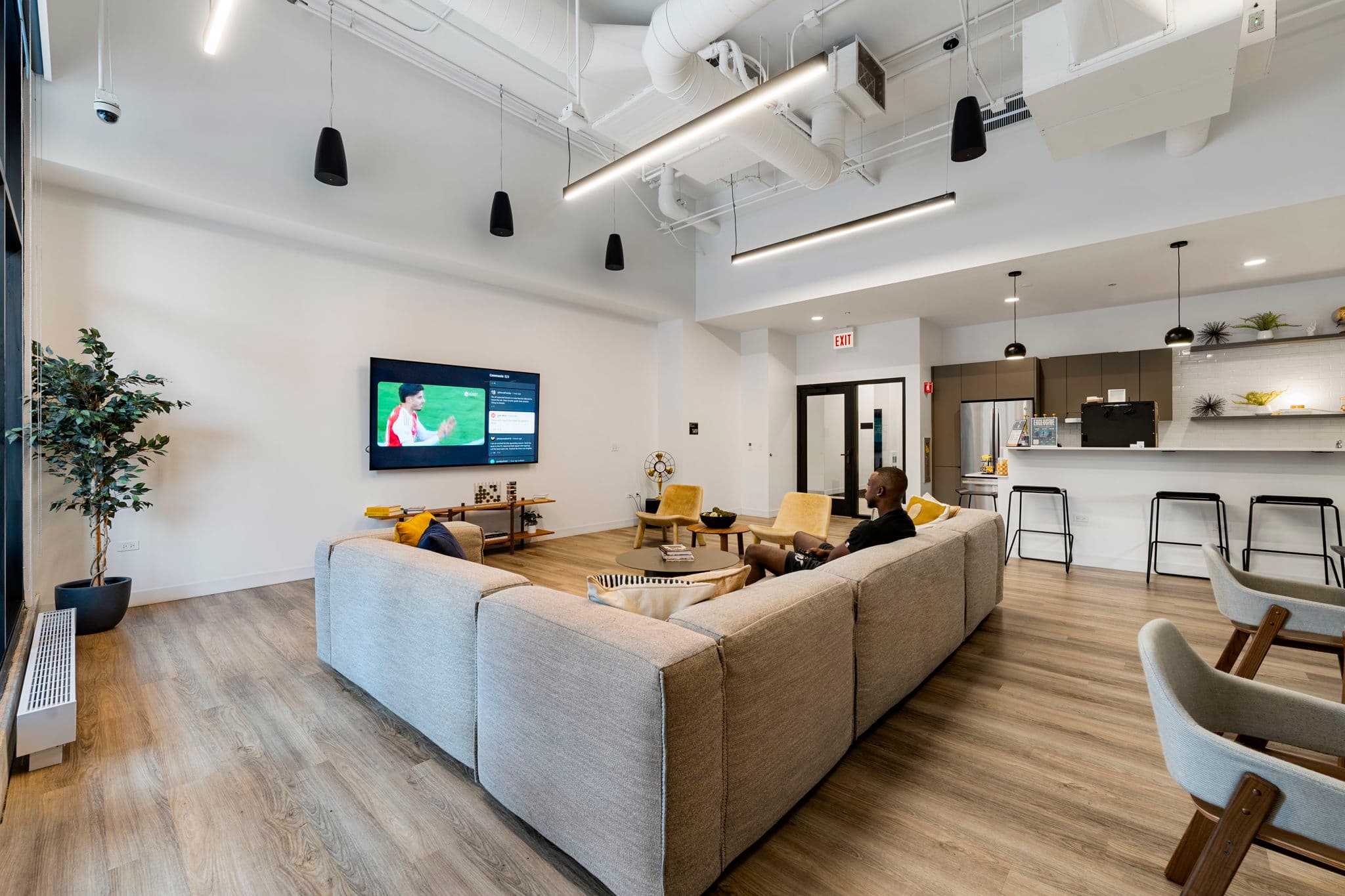
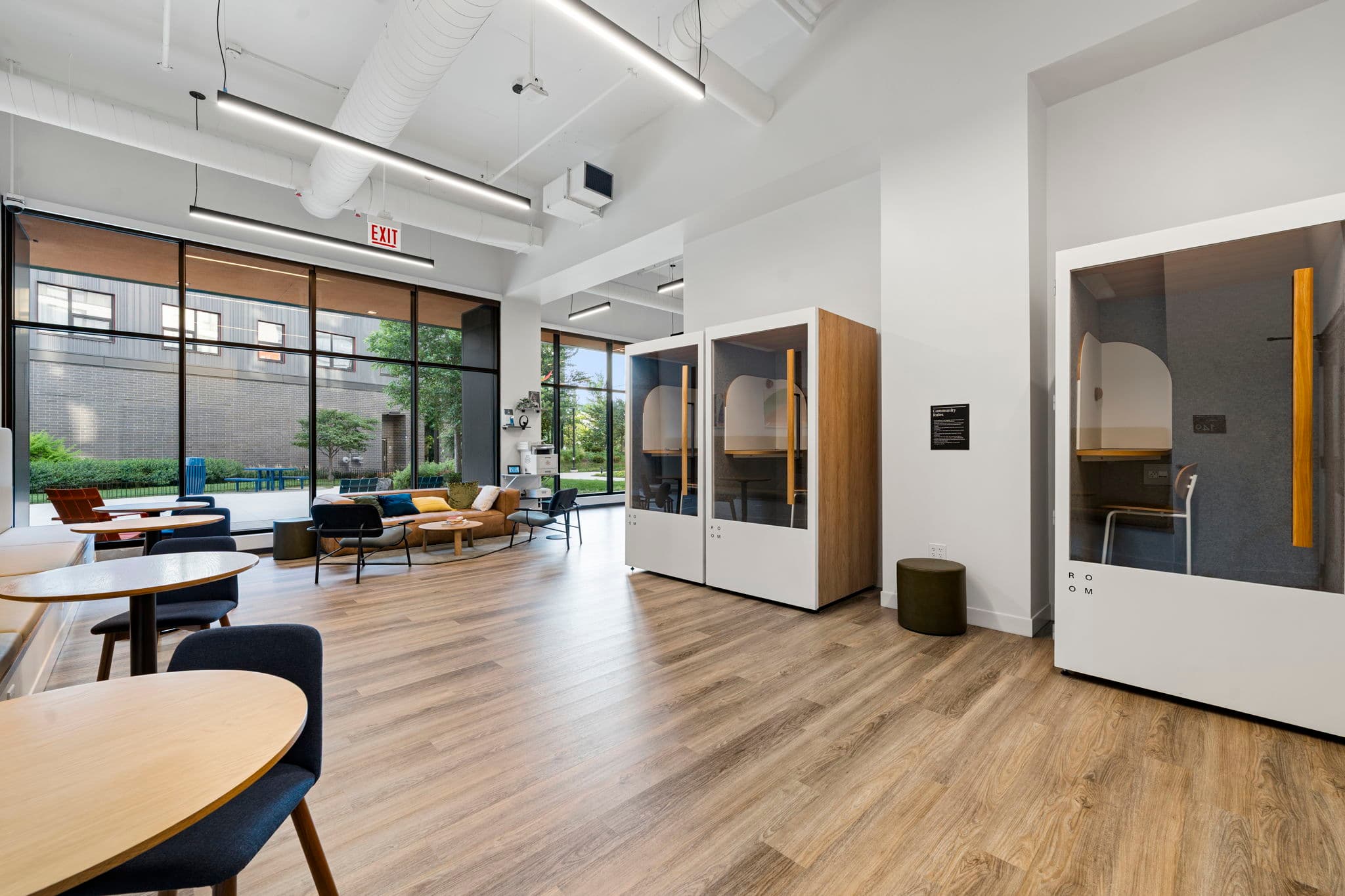
For residents at Post Chicago (853 W Blackhawk St), security starts at the building level. The property features controlled-access entry with key fob systems, so no one enters the building without authorization. Common areas — lobbies, hallways, the co-working space, and the rooftop terrace — are well-lit and monitored. Package delivery goes to a secure, interior area rather than a doorstep, which eliminates the porch piracy issue that drives property crime statistics in the neighborhood.
The building's location on Blackhawk Street places it on a quiet residential block between two major commercial corridors (Halsted and Clybourn), with consistent pedestrian traffic and street lighting. It's the kind of block where you feel comfortable arriving home late — not a dead zone, not an entertainment district, just a well-maintained residential street in the heart of the neighborhood.
For a full overview of what the neighborhood offers beyond safety, explore the Lincoln Park neighborhood guide.
CTA Safety in Lincoln Park
Public transit is how most Lincoln Park residents get around, and the CTA stations in the neighborhood are among the safest and busiest in the system. The three primary stations — Fullerton, Armitage, and Sedgwick on the Brown Line, plus Fullerton and North/Clybourn on the Red Line — see tens of thousands of daily riders, which means they're staffed, monitored, and well-lit during all operating hours.
A few practical tips for CTA safety, especially if you're new to urban transit:
- Ride in the conductor's car late at night. On the Red Line (which runs 24 hours), the conductor is typically located in the middle of the train. Look for the car with the conductor's booth — it will always have at least one CTA employee present.
- Stand back from the platform edge. This is standard urban transit advice, but it's worth repeating. Stand a few feet back until the train comes to a full stop, then board.
- Use the well-lit entrances. Fullerton and Armitage stations have multiple entrances. If one looks quiet or dimly lit, walk to the other. At Fullerton, the main entrance at the intersection of Fullerton, Lincoln, and Sheffield is always busy.
- Stay alert, not anxious. Earbuds are fine on the train, but keep one ear open on late-night platforms. Be aware of your surroundings the way you would in any public space.
- Download the Ventra app. It shows real-time train arrival information, so you can time your arrival at the station to minimize waiting time on the platform.
According to the CTA, ridership at Fullerton station averages approximately 55,000 daily — making it one of the most active stations in the entire system. High ridership means more eyes, more staff, and faster emergency response. It also means you're rarely alone on a platform, even late in the evening.
For a complete guide to getting around Lincoln Park by train, bus, bike, and on foot, see our CTA and transit guide.
Safety Resources
If you live in Lincoln Park (or you're about to), bookmark these resources. You probably won't need them often, but knowing where they are saves time when you do.
| Resource | What It's For | How to Access |
|---|---|---|
| CPD CLEAR Map | View reported crimes by location and date | Online dashboard — search by address |
| 311 (Non-Emergency) | Report non-emergency issues: streetlight outages, suspicious activity, noise | Call 311 or use the CHI 311 app |
| 911 (Emergency) | Report crimes in progress or emergencies | Call 911 |
| Chicago OEMC | Emergency management alerts and preparedness | Sign up for NotifyChicago alerts |
| CAPS (Community Policing) | Attend monthly beat meetings for District 18 | Check CPD CAPS calendar |
| Lincoln Park Community Alliance | Neighborhood watch, community updates, safety alerts | Website and email newsletter |
Two things worth doing in your first week: sign up for NotifyChicago alerts (the city's emergency notification system) and attend one CAPS beat meeting for your area. CAPS meetings happen monthly, last about an hour, and are where your local police officers discuss current crime trends and answer questions from residents. They're the single best way to understand what's actually happening on the streets near your home — and they're significantly more accurate than social media or neighborhood apps, which tend to amplify fear beyond what the data supports.
The Bottom Line
Lincoln Park is one of the safest neighborhoods in Chicago — and the data backs that up consistently across years of CPD reporting. Its violent crime rate runs approximately 60% below the citywide average, its streets are walkable and well-lit, its transit stations are among the busiest (and therefore safest) in the CTA system, and its community policing infrastructure is one of the most active in the city.
No urban neighborhood is crime-free. But Lincoln Park's risk profile is dominated by low-level property crime — primarily package and bike theft — rather than the violent incidents that dominate Chicago's media coverage. The practical steps to stay safe are the same ones you'd follow in any mid-size to large American city: be aware of your surroundings, protect your belongings, stick to well-lit streets at night, and trust your instincts.
If safety is a deciding factor in your move to Chicago (and it should be part of the equation), Lincoln Park is as safe a bet as you'll find. The real question isn't whether the neighborhood is safe enough — it's whether it fits your budget, your commute, and your lifestyle. And on those fronts, Lincoln Park tends to deliver too.
See Lincoln Park for Yourself
Post Chicago offers furnished co-living rooms in the heart of Lincoln Park — controlled-access building, all-inclusive pricing, and flexible leases from 3 months. Come see the neighborhood and the building in person.
Schedule a TourFAQ