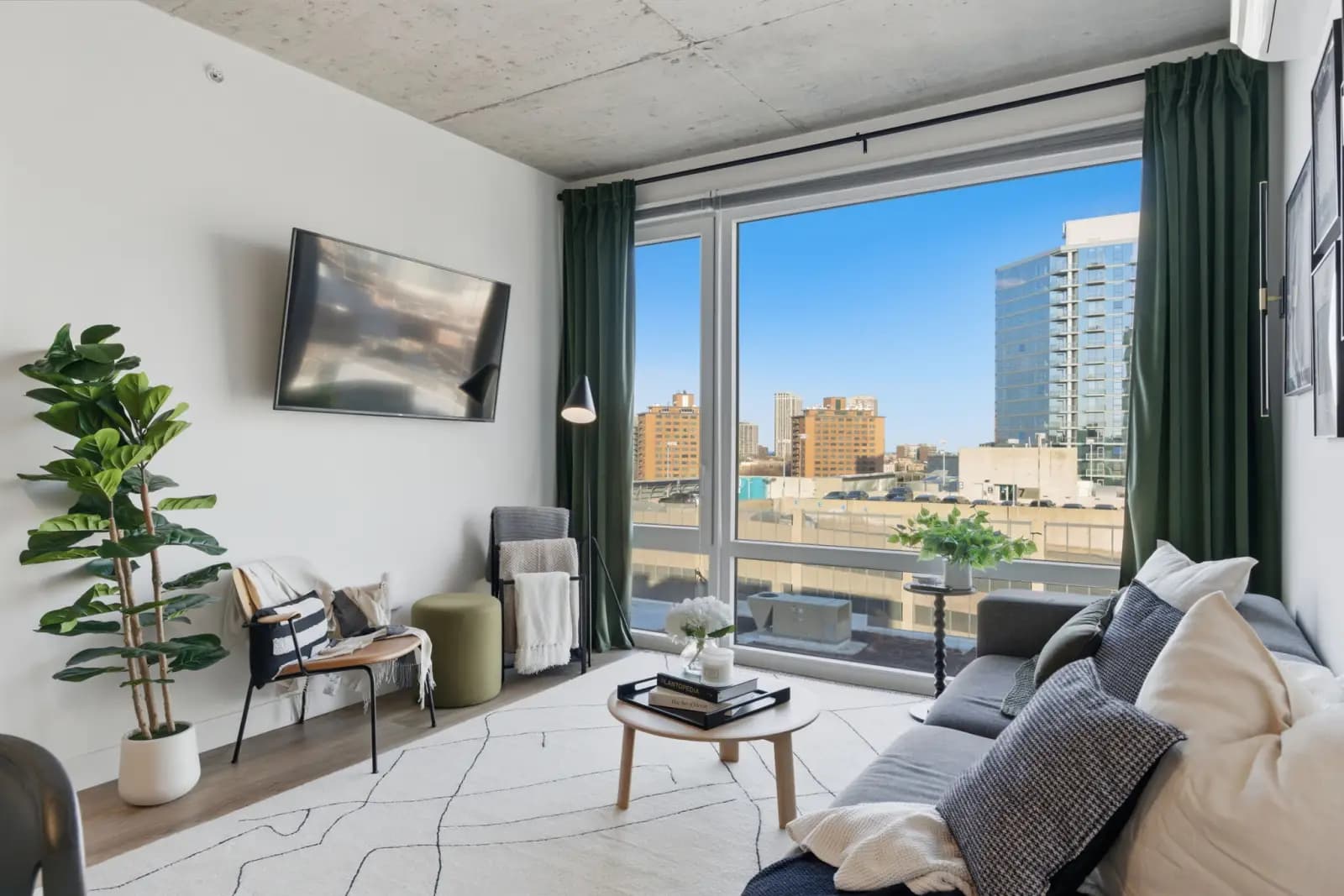
Why Loyola Students Are Looking Beyond Rogers Park
Rogers Park is the default neighborhood for Loyola students, and for good reason — the Lake Shore Campus sits right in the middle of it. But a growing number of upperclassmen and grad students are choosing to live farther from campus in exchange for a neighborhood that feels more like the Chicago they came here to experience. The reasons are consistent: a stronger social scene, better dining and nightlife, and proximity to the career networks concentrated in Lincoln Park and the Near North Side.
Loyola's on-campus housing serves primarily freshmen and sophomores. By junior year, most students are apartment hunting — and once you are off campus, the question becomes whether to stay in Rogers Park or explore what the rest of Chicago offers. According to NCES enrollment data, Loyola enrolls over 17,000 students, with a significant graduate and professional school population. These older students, in particular, tend to prioritize neighborhood quality and career access over walking distance to campus.
Rogers Park is a good neighborhood. It is also one of the most geographically isolated in Chicago — tucked into the far northeast corner of the city, bordered by Evanston to the north and the lake to the east. For students who want to experience Chicago beyond their campus bubble, that isolation becomes a limitation.
Rogers Park vs. Lincoln Park for Loyola Students
This is the central tradeoff Loyola students face when choosing off-campus housing. Here is an honest comparison.
| Factor | Rogers Park | Lincoln Park |
|---|---|---|
| Distance to Loyola | 0-1 miles (walking) | ~6 miles (25 min Red Line) |
| Average 1BR Rent | $1,100-1,600/mo | $1,400-2,200/mo |
| Co-Living Option | Limited | $1,350-1,550/mo all-inclusive |
| Dining Scene | Diverse but limited | Extensive — 200+ restaurants |
| Nightlife | Minimal | Strong — bars, live music, events |
| Safety (CPD data) | Mixed by block | Consistently lower crime rates |
| Transit to Loop | 35-40 min Red Line | 15-20 min Red Line |
| Grocery Options | Basic chains, ethnic markets | Whole Foods, Trader Joe's, local markets |
| Lake Access | Rogers Park beaches | North Avenue Beach, Lincoln Park Zoo |
| Career Networking | Limited | High — young professional hub |
| Walkability | Good near campus | Excellent throughout |
| Best For | Freshmen/sophomores, budget priority | Upperclassmen, grad students, full city experience |
According to the Bureau of Labor Statistics, Chicago metro rent has increased 4.7% year-over-year. Rogers Park has historically been insulated from the sharpest increases, but the gap between Rogers Park and Lincoln Park narrows considerably when you factor in the amenities included with co-living.
The key insight: a $1,350/mo co-living room in Lincoln Park is only $150-250 more than a typical Rogers Park one-bedroom — and the co-living price includes furniture, utilities, WiFi, and weekly cleaning that would add $300-500/mo to a Rogers Park apartment's true cost.
How Much Does Off-Campus Housing Cost Near Loyola?
Cost is the primary reason students default to Rogers Park. But the full picture is more nuanced than headline rent numbers suggest.
| Expense | Loyola Dorms | Rogers Park Apt | Co-Living (Post Chicago) |
|---|---|---|---|
| Monthly Cost | $1,400-1,650 | $1,100-1,600 | $1,350-1,550 |
| Room Type | Shared room | Private (if 1BR) | Private room |
| Furniture | Basic | You buy everything | Fully furnished |
| Utilities | Included | $150-300/mo extra | Included |
| WiFi | Included | $60-80/mo extra | Included (500+ Mbps) |
| Cleaning | Not included | You clean or hire | Weekly professional cleaning |
| Laundry | Coin-op in building | Coin-op or laundromat | In-unit |
| Meal Plan | Required (~$2,800/yr) | N/A | N/A |
| Lease Term | Academic year | 12 months | 3-18 months |
| True Monthly Cost | $1,711-1,961 | $1,310-1,980 | $1,350-1,550 |
For a 9-month academic year:
- Loyola dorms: $15,400-17,650
- Rogers Park apartment: $11,790-17,820 (plus $2,000-4,000 furniture if you do not own it)
- Co-living at Post Chicago: $12,150-13,950
25 min
CTA Red Line from Lincoln Park to Loyola campus
Direct ride from North/Clybourn to Loyola station — no transfers, runs every 4-8 minutes.
The co-living option lands in the middle on raw cost but leads on value. You get a private room (not shared), in a fully furnished building, with professional cleaning, in a significantly better neighborhood for social life and career access. For grad students and upperclassmen whose priorities extend beyond proximity to lecture halls, the math favors Lincoln Park.
Getting to Loyola from Lincoln Park
The CTA Red Line runs directly between Lincoln Park and Loyola's campus. No transfers, no complicated routing — one train, one direction.
Door-to-door from Post Chicago to Loyola's Lake Shore Campus:
- Walk to North/Clybourn CTA station (5 minutes from Post Chicago)
- Board the Red Line northbound
- Exit at Loyola station (20 minutes ride time)
- Walk to campus buildings (3-5 minutes)
Total commute: approximately 25-30 minutes door-to-door.
A single CTA ride costs $2.50 with a Ventra card. A 30-day unlimited pass costs $75. Loyola students should check eligibility for the CTA U-Pass program, which provides unlimited rides at a reduced flat rate billed through tuition.
The Red Line runs every 4-8 minutes during peak hours (7-9 AM, 4-7 PM) and every 8-12 minutes off-peak. Late-night service continues until approximately 1:30 AM, with owl service buses covering the route overnight. For students with evening classes or late study sessions, the return trip remains reliable.
For comparison, many Rogers Park students who live more than a few blocks from campus still commute 15-20 minutes by bus or on foot. The incremental time cost of Lincoln Park is roughly 10 additional minutes — a modest tradeoff for a fundamentally different living experience.
Why Co-Living Fits Loyola Students
Loyola is a Jesuit university, and the Ignatian tradition is not just a branding exercise — it shapes how Loyola students think about community, service, and responsibility to the people around them. Co-living resonates with that formation in a way that solo apartment living simply does not.
Ignatian Values Meet Intentional Community
The Jesuit concept of cura personalis — care for the whole person — extends to how you live, not just how you study. Co-living at Post Chicago is structured around shared responsibility and genuine connection: a household of people in their twenties who share meals in a common kitchen, conversation on the rooftop terrace, and the ordinary rhythms of daily life. It is closer to the residential community Loyola cultivates on campus than a solo studio in Rogers Park where you might not know your neighbor's name. For students whose campus experience has been shaped by service-learning trips, faith-and-justice seminars, and the Loyola tradition of accompaniment, co-living feels like a natural next step.
The Suburban-to-City Transition, Made Simple
Loyola draws heavily from the Chicago suburbs — Naperville, Schaumburg, Arlington Heights, the western and northern collar counties. According to the university's enrollment profile, a significant majority of undergraduates come from Illinois. Many are moving out of their parents' home for the first time. They want the full Chicago experience — real neighborhoods, independent restaurants, the feeling of being in the city — but they also want a support structure that does not disappear the moment they leave campus. Co-living provides that bridge: a furnished room ready on arrival (bed, desk, seating, linens, full kitchen access, in-unit laundry), housemates who know the neighborhood, and a building manager who handles maintenance so you are not Googling "how to fix a garbage disposal" at 11 PM.
Housing That Matches the Academic Calendar
Loyola's semester system means your housing needs shift: nine months for the academic year, maybe four months if you stay for summer, a single semester if you are returning from study abroad in Rome or Vietnam. Traditional 12-month leases force you to pay for months you are not there or scramble for subletters on Facebook groups. Post Chicago's 3-to-18-month terms let you align your lease with your actual Loyola schedule — sign for the fall and spring, head home for summer, and avoid dead rent.
A Backup Study Space When Cudahy Is Full
Finals week at Loyola means every seat in Cudahy Library is taken by 9 AM. Post Chicago's co-working areas are available around the clock — quiet desk space, enclosed phone booths for group project calls, and WiFi that runs at 500+ Mbps consistently. Having a focused study environment 30 seconds from your bedroom, with no commute and no competition for seats, changes how you manage exam periods.
When to Start Your Search
Loyola's academic calendar follows a standard semester structure, with fall move-in in late August and spring in early January. The housing search timeline should start well before those dates.
For Fall Semester (August Move-In)
Start looking: May or June. Lincoln Park is one of Chicago's most competitive rental markets. The best furnished, flexible-lease options fill quickly as summer approaches. By mid-July, your choices narrow significantly. According to Chicago rental market data, Lincoln Park vacancy rates drop below 5% during peak leasing season.
For Spring Semester (January Move-In)
Start looking: October or November. Fewer units turn over mid-year, so the window is smaller. Starting early gives you time to tour spaces over Thanksgiving break if you are coming from out of the area.
For Summer (May/June Move-In)
Start looking: March or April. Co-living's 3-month minimum lease term is a natural fit for summer stays — whether you are doing a Chicago internship, taking summer courses, or simply want to spend the summer in the city.
Application Tips for Loyola Students
- Have documentation ready. Most buildings require a government-issued ID, proof of enrollment, and a co-signer if you lack independent income. Having these prepared speeds the process considerably.
- Tour in person. Walk through the space, check the commute to North/Clybourn station, and get a feel for the neighborhood. If you are visiting from the suburbs, make a day of it — tour in the morning, explore Lincoln Park in the afternoon.
- Ask about student-specific policies. Post Chicago's application works for students who have never rented before — which describes most Loyola juniors moving off campus for the first time. No prior lease history required, and parent co-signers are accepted.
Read the full student housing guide
The real cost of living off campus as a Chicago student
Explore Lincoln Park as a neighborhood
Loyola Students: See Your Room
Furnished co-living in Lincoln Park, 25 minutes from campus via the Red Line. Flexible leases from 3 months. Tour Post Chicago today.
Check AvailabilityFAQ