What Are Your Student Housing Options in Chicago?
Every student in Chicago faces the same decision after freshman year: stay in the dorms or find something better. The three realistic options are university dormitories, traditional off-campus apartments, and co-living. Each comes with tradeoffs in cost, convenience, and quality of life — and the right choice depends on how you actually want to live, not just what your university housing office defaults you into.
Chicago is home to more than 100 colleges and universities, enrolling over 300,000 students according to the National Center for Education Statistics. That is a massive population competing for housing in a city where rents have climbed steadily year over year. Understanding your options before you start searching saves time, money, and the particular misery of signing a lease you regret.
Dorms
University housing is the default for freshmen, and many schools require first-year students to live on campus. The appeal is simplicity: you sign up, you move in, your meal plan feeds you. The drawbacks are just as straightforward: shared rooms, shared bathrooms, strict rules, limited privacy, and costs that rarely reflect the quality of the space. Most Chicago dorms were built decades ago and show their age.
Traditional Off-Campus Apartments
Renting your own apartment gives you independence and privacy — but it also gives you a 12-month lease, a furniture bill, utility accounts to set up, and the full-time job of finding reliable roommates. For students who know they will be in Chicago for multiple years and want to build a home base, this path can work. For everyone else, it creates more problems than it solves.
Co-Living
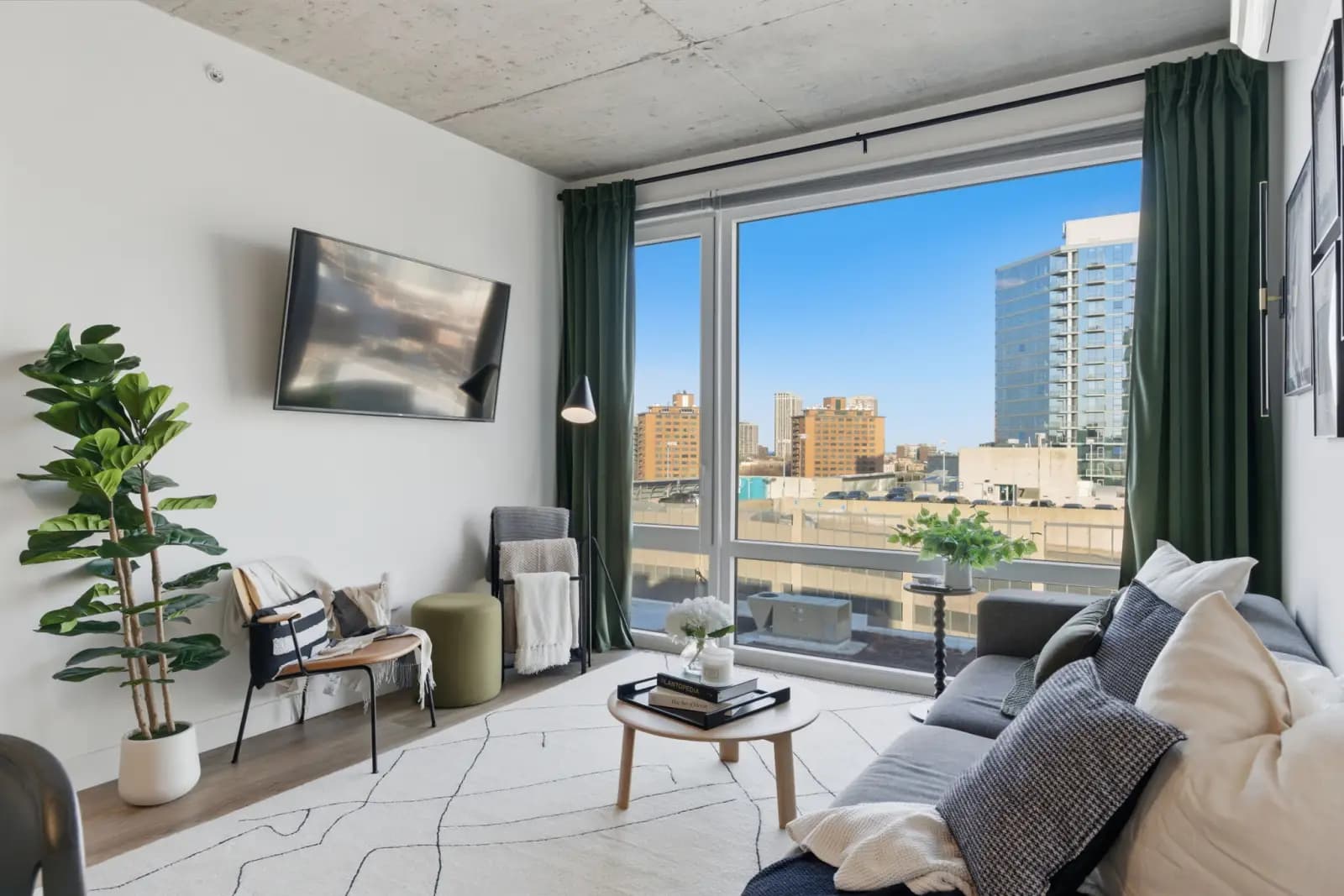
Co-living splits the difference. You get a private, furnished bedroom with a lock on the door inside a shared apartment with common spaces. Rent covers everything — furniture, utilities, WiFi, weekly cleaning — and lease terms run from 3 to 18 months. No furniture to buy. No utility accounts to open. No roommate drama, because housemate matching is handled by the building. For students on academic timelines that rarely align with 12-month leases, co-living removes the friction that makes off-campus housing stressful.
How Much Does Student Housing Cost in Chicago?
The real answer is always higher than the number on the listing. Dorms look expensive until you factor in what they include. Apartments look affordable until you add everything they do not. Co-living is the only option where the listed price is the actual price.
Here is how the three options compare on a true cost basis:
| Option | Monthly Cost | What's Included | Lease Length |
|---|---|---|---|
| University Dorms | $1,667-1,778/mo (academic year) | Meal plan, shared room, shared bath, basic WiFi | Academic year (9 months) |
| Traditional Apartment | $1,200-2,400/mo | Nothing — add utilities, WiFi, furniture, cleaning | 12 months |
| Co-Living (Post Chicago) | $1,350-1,550/mo | Furniture, utilities, WiFi, weekly cleaning, amenities | 3-18 months |
The dorm figure of $1,000 to $1,400 per month is calculated from full-year housing costs at Chicago universities. DePaul University lists room and board at approximately $15,000-$16,000 per academic year. Divide that by nine months and the monthly cost lands between $1,667 and $1,778 — and that is for a shared room with a communal bathroom down the hall.
$1,350
Starting monthly rent, everything included
Private furnished room at Post Chicago in Lincoln Park — utilities, WiFi, and weekly cleaning bundled in.
When you compare a $1,350/mo co-living room (private, furnished, all-inclusive) against a $1,667/mo dorm room (shared, unfurnished beyond a twin bed, meal plan included but limited), the co-living option is both cheaper and significantly more comfortable. The dorm meal plan has value, but most upperclassmen prefer cooking their own food — and co-living kitchens are fully equipped for that.
For a deeper financial breakdown comparing co-living to traditional apartments, see our detailed cost comparison.
Best Chicago Neighborhoods for Students
Chicago's student population spreads across the city, clustering around major campuses. The neighborhood you choose determines your commute, your social life, your safety, and your budget. Here are the five most popular areas for students and what each offers.
Lincoln Park — DePaul University
Lincoln Park is the strongest all-around neighborhood for students in Chicago. DePaul University's Lincoln Park campus sits at the center of one of the city's most walkable, transit-connected, and amenity-rich areas. The Red Line at Fullerton and the Brown Line at Armitage provide direct access to the Loop in 15 minutes. The neighborhood has a density of restaurants, coffee shops, and nightlife that keeps it lively without feeling unsafe — Lincoln Park consistently ranks among Chicago's safest neighborhoods.
Post Chicago at 853 W Blackhawk St is half a mile from DePaul's Lincoln Park campus. That is a 10-minute walk or a 3-minute bike ride. For DePaul students considering off-campus housing, the proximity is hard to beat.
For a comprehensive look at living in this neighborhood, see our Lincoln Park neighborhood guide.
Rogers Park — Loyola University Chicago
Loyola's Lake Shore campus sits in Rogers Park on Chicago's far North Side, directly on the lakefront. The neighborhood is one of the most affordable in the city, with one-bedroom apartments averaging $1,100-$1,400/mo. The Red Line at Loyola station connects to downtown in about 35 minutes. Rogers Park has a diverse, community-oriented feel, but fewer dining and nightlife options compared to neighborhoods closer to the city center.
University Village — UIC
The area around the University of Illinois at Chicago campus has transformed significantly in the past decade. University Village offers newer construction, proximity to the Blue and Pink Lines, and easy access to the medical district. Rents run $1,200-$1,800/mo for one-bedrooms. The neighborhood is practical and affordable, though it lacks the walkable restaurant and bar density of Lincoln Park or Lakeview.
Evanston — Northwestern University
Northwestern students mostly live in Evanston, a separate city north of Chicago with its own character. Evanston offers a quieter, more suburban feel with strong transit access via the Purple Line to downtown Chicago (about 40 minutes). Housing costs are moderate by Chicago standards, but options for furnished, flexible-lease housing are limited. Northwestern students who want a more urban experience often look south toward Lincoln Park or Lakeview, commuting via CTA.
South Loop — Columbia College Chicago
The South Loop serves students at Columbia College, Roosevelt University, and the School of the Art Institute. The neighborhood sits adjacent to Grant Park, the Museum Campus, and the lakefront — exceptional for quality of life. According to the CTA system map, the Red, Green, and Orange Lines all serve the South Loop, making it one of the best-connected areas in the city. Rents range from $1,400 to $2,200/mo for one-bedrooms.
Why Co-Living Is Ideal for Students
Co-living solves the specific problems that make off-campus housing difficult for students. The model was not designed exclusively for students, but the overlap between what students need and what co-living provides is nearly total.
Furnished Means No Moving Costs
The average cost of furnishing a one-bedroom apartment in Chicago runs $3,000 to $5,000 according to the Bureau of Labor Statistics Consumer Expenditure Survey. For a student who may only need housing for 9 months, that investment makes no financial sense. You buy furniture in September, sell it at a loss in May, and repeat the cycle the following year. Co-living eliminates this entirely. Every room comes furnished with a bed, desk, chair, and linens. You arrive with a suitcase and leave with a suitcase.
Flexible Leases Match Academic Calendars
Traditional Chicago apartments require 12-month leases. The academic year runs roughly 9 months. That three-month mismatch means you either pay for months you do not use, sublet (which most landlords restrict), or find someone to take over your lease. At Post Chicago, lease terms range from 3 to 18 months. A 9-month lease for the academic year, a 3-month lease for summer session, a 5-month lease for a single semester — the term matches your actual timeline.
Community Is Built In
Moving to a new city — or even just moving off campus — can be isolating. In a traditional apartment, meeting neighbors is a matter of luck. In co-living, you share common spaces with housemates and have access to building amenities like the coffee bar, terrace, and community lounge. The social infrastructure exists from day one. You do not have to build it from scratch.
All-Inclusive Means Predictable Budgeting
Students and their families need predictable monthly costs. A co-living payment covers rent, utilities, WiFi, and weekly cleaning in one number. There are no surprise electric bills in January, no disputes about who owes what for the internet, and no separate cleaning service to coordinate. One payment, one number, every month.
Housing That Fits Your Semester
Flexible leases from 3 to 18 months at Post Chicago in Lincoln Park — furnished and all-inclusive.
See Available RoomsWhat to Look for in Off-Campus Housing
Whether you choose co-living, a traditional apartment, or any other arrangement, these are the factors that separate good off-campus housing from regrettable off-campus housing.
Proximity to Campus
Every minute of commute time is a minute you could spend studying, sleeping, or having a life. Prioritize housing within walking distance (under 15 minutes) or a single CTA ride (under 25 minutes) from your primary campus. According to CTA trip planner data, the average student who lives more than 30 minutes from campus by transit loses approximately 250 hours per academic year just commuting — the equivalent of more than 10 full days.
Transit Access
If you cannot walk to campus, you need reliable CTA access. Housing within a 5-minute walk of an L station on the Red, Brown, Blue, or Green Lines gives you connectivity to nearly every major campus and employment center in the city. Bus-only areas add unpredictability to your commute, especially in winter.
Lease Flexibility
Does the lease match your actual needs? A 12-month lease for a 9-month academic year means three months of wasted rent — roughly $3,600 to $7,200 depending on the apartment. Ask about early termination clauses, subletting policies, and whether shorter terms are available.
What Is Included
The monthly rent number is meaningless without knowing what it covers. Ask explicitly: Are utilities included? WiFi? Furniture? Cleaning? Laundry? The difference between a $1,400/mo apartment and a $1,400/mo co-living room is that the apartment requires another $400-$600/mo in additional expenses. Always compare total monthly cost, not base rent.
Safety
Check the NCES College Navigator for campus crime statistics, and review the Chicago Police Department's CLEAR crime map for any neighborhood you are considering. Walk the area at night before signing anything. Look for well-lit streets, active foot traffic, and proximity to campus security resources.
International Students: Special Considerations
International students face a set of housing challenges that domestic students do not. Co-living addresses nearly all of them.
No U.S. Credit History Required
Traditional landlords in Chicago almost universally run credit checks. International students arriving without a U.S. credit history often face rejections, higher deposits, or the requirement of a U.S.-based co-signer. Many co-living buildings, including Post Chicago, have application processes designed to accommodate international applicants who can demonstrate income or financial support without a traditional credit file.
Furnished Means No Buying and Selling
Shipping furniture internationally is prohibitively expensive. Buying furniture upon arrival — when you are also dealing with jet lag, orientation, and a new academic environment — is overwhelming. And selling everything when you leave for the summer or permanently is a hassle that wastes the final weeks that should be spent on exams and goodbyes. Co-living rooms are fully furnished. The problem does not exist.
Community Eases the Transition
The adjustment to a new country is significant. Co-living provides built-in social connections from day one — housemates to cook with, a coffee bar for casual conversations, community events that do not require already knowing people in the city. According to NCES data on international enrollment, Chicago hosts over 30,000 international students across its universities. Many find that co-living with a mix of domestic and international residents helps them build a social network faster than living alone in an apartment.
All-Inclusive Eliminates Administrative Burden
Setting up utility accounts (ComEd, Peoples Gas, internet providers) requires a Social Security number or ITIN in many cases, plus a U.S. bank account, plus a phone number — all things an international student may not have in their first week. Co-living bundles everything into a single monthly payment. No accounts to open, no bills to split, no paperwork to navigate in an unfamiliar system.
The Application Timeline
Timing matters more than most students realize. The best off-campus housing in popular neighborhoods goes fast, and starting late means settling for leftovers.
For Fall Semester (August/September Move-In)
- March-April: Begin your search. Browse listings, identify neighborhoods, set your budget.
- May-June: Tour your top options. Apply for your first choice. At Post Chicago, the process from inquiry to signed lease can happen in as little as one week.
- July: Finalize your lease, arrange move-in logistics, and coordinate with your university about canceling dorm housing if applicable.
- August: Move in. At co-living, this means arriving with your suitcase. The room is ready.
For Spring Semester (January Move-In)
- October-November: Start searching. Spring availability is often tighter because fewer residents turn over mid-year.
- November-December: Tour and apply. Secure your lease before the holiday break so you are not scrambling in January.
For Summer Session (May/June Move-In)
- March-April: Begin your search. Summer-specific leases (3-4 months) are a natural fit for co-living.
- April-May: Apply and sign. Summer terms at Post Chicago start at 3 months — no paying for a 12-month lease you will only use for three.
3 mo
Shortest available lease term
Perfect for summer sessions, single semesters, and internships.
Dive Deeper
This guide covers the fundamentals of student housing in Chicago. For more detailed information on specific topics, we have written focused guides on the subjects that matter most to students:
-
Off-Campus Housing Near DePaul: Best Options for 2026-2027 — A hyperlocal guide for DePaul students covering neighborhoods, costs, transit routes to campus, and why co-living beats a traditional lease in Lincoln Park.
-
What Northwestern Students Should Know About Living in Chicago — Evanston vs. the city, transit options, and how to get the urban experience without a brutal commute.
-
The Real Cost of Living Off Campus as a Chicago Student — A semester-by-semester financial breakdown including tuition-adjacent costs, meal plans vs. cooking, and how to maximize a housing budget.
For broader context on the co-living model and how it works, see our complete guide to co-living in Chicago. For details on what is included in every co-living room, read what's actually included in co-living rent.
Find Your Room
Choosing where to live shapes your entire college experience. The right housing saves you money, gives you privacy, keeps you close to campus, and connects you with people worth knowing. The wrong housing drains your budget, wastes your time on commutes, and creates stress that follows you into the classroom.
At Post Chicago in Lincoln Park, we have built student-friendly housing that eliminates the compromises: private furnished rooms, flexible leases that match academic calendars, all-inclusive pricing with no surprise bills, and a community of students and young professionals who are building their lives in Chicago alongside you.
Ready to See Your Room?
Schedule a tour of Post Chicago — furnished co-living rooms in Lincoln Park, half a mile from DePaul.
Check AvailabilityFAQ